
You might think dental problems take months or years to develop, but dental plaque can begin forming within hours.
It doesn’t hurt straight away, and that’s exactly why it’s dangerous. This largely-invisible threat to oral health, plaque quietly builds on tooth surfaces and along the gumline. For many people, it goes unnoticed until the damage to your teeth and gums has already begun.
Plaque causes issues faster than most people realise. It begins forming on your teeth within hours of brushing and can harden, irritate gums, and damage enamel if it isn’t removed regularly. Left unchecked, this buildup increases the risk of cavities, gum disease, and ongoing bad breath, and regular brushing isn’t always enough.
So, how can you stop plaque before it causes problems? Understand what plaque is, how fast it grows, and how to keep it under control.
What exactly is dental plaque?
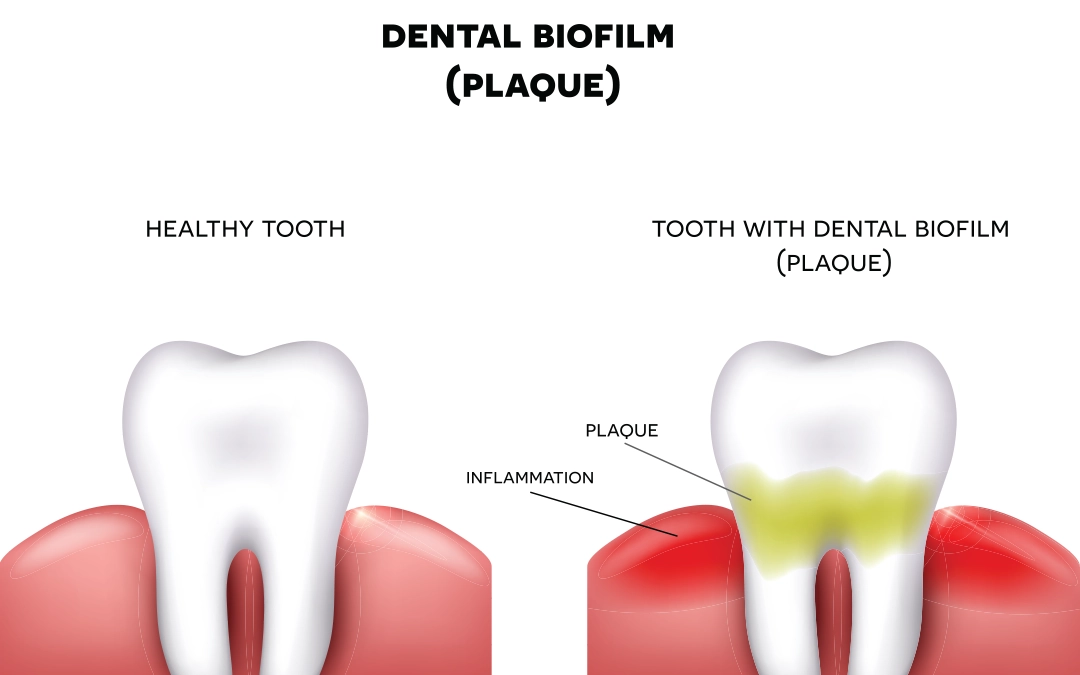
Dental plaque is a soft, sticky film, known medically as a biofilm, that naturally forms on your teeth every day. It’s made up of bacteria, food residues, and proteins found in saliva, and it tends to collect on tooth surfaces, between teeth, and along the gumline.
Unlike loose food particles, plaque can’t be rinsed away with water. It clings firmly to teeth and begins forming soon after you eat or drink. Plaque bacteria feed on sugars and carbohydrates from your diet, producing acids as a by-product.
These acids gradually weaken tooth enamel and trigger inflammation in the gums. Over time, if plaque isn’t removed effectively, this process can lead to tooth decay, gum disease, and other oral health problems.
It’s important to know that plaque itself is completely normal; everyone develops it. The real issue arises when plaque isn’t removed thoroughly and consistently through daily brushing, interdental cleaning, and regular professional care.
How quickly does dental plaque grow?
The short answer: very quickly, often much faster than people expect.
Plaque begins forming soon after brushing and continues to build throughout the day:
- Within 4–12 hours: A new layer of plaque can start forming on tooth surfaces
- After 24 hours: Plaque becomes more organised, thicker, and harder to remove with regular brushing alone
- Within 48–72 hours: Plaque can begin to harden into tartar (calculus) if it isn’t properly removed
Once plaque hardens into tartar, it firmly attaches to the teeth and can no longer be removed with a toothbrush or floss. At this stage, professional dental cleaning is required to safely remove it.
This rapid timeline explains why missing brushing or interdental cleaning (even for just a day or two) can quickly lead to plaque build-up, particularly along the gumline, where it’s easiest to miss.
Why dental plaque is a real danger
Dental plaque isn’t just a cosmetic concern or something that affects how your teeth look. When it isn’t managed properly, plaque becomes the starting point for several serious oral health problems, many of which develop quietly over time.
Tooth decay (cavities)
Plaque bacteria feed on sugars in your diet and produce acids as a by-product. These acids gradually weaken tooth enamel, making teeth more vulnerable to decay. Cavities often form silently, especially between teeth or near the gumline, and may not cause pain until the damage is more advanced.
Gum disease
When plaque builds up along the gumline, it triggers inflammation known as gingivitis. Gums may appear red, swollen, tender, or bleed during brushing or flossing.
If gingivitis isn’t treated early, it can progress to periodontitis — a more advanced form of gum disease that affects the bone and tissues supporting your teeth. Over time, this can lead to gum recession, loose teeth, or even tooth loss.
Persistent bad breath
The bacteria found in plaque release sulphur compounds that contribute to ongoing bad breath (halitosis). Because plaque continually reforms, bad breath can persist even with regular brushing if plaque isn’t being thoroughly removed.
Broader health implications
Ongoing gum inflammation has also been linked to wider health concerns, including heart disease, complications with diabetes, and respiratory conditions. While plaque begins in the mouth, its effects can extend beyond it, highlighting the importance of maintaining good oral health as part of overall wellbeing.
Why is plaque so hard to fully remove at home
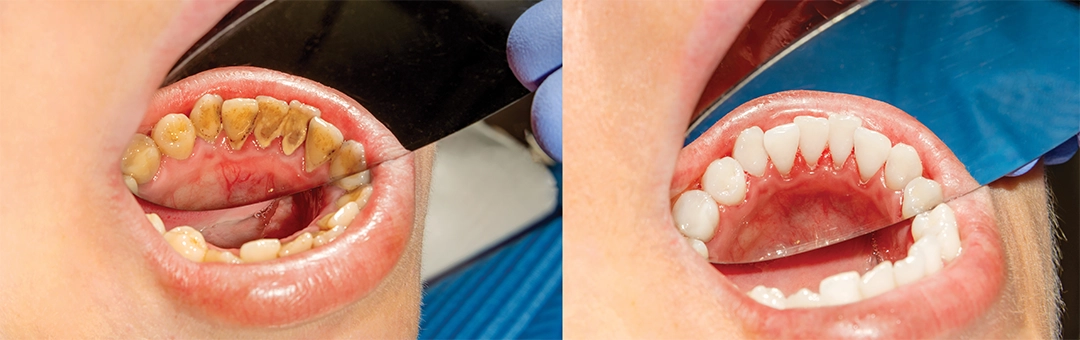
Even with good brushing habits, plaque can still linger in areas that are easy to miss during everyday cleaning. This is a particular issue in areas the toothbrush doesn’t reach well.
Common hiding spots include:
- Between teeth, where bristles can’t clean effectively
- Around dental restorations such as crowns, veneers, and fillings
- Along and just below the gumline, where plaque often builds undisturbed
- Behind back molars, which are harder to see and access
Manual toothbrushes don’t always clean every surface thoroughly. When plaque is consistently missed, it can accumulate, harden, and become more difficult to manage over time.
This is why daily flossing or interdental cleaning is just as important as brushing, and why regular professional cleans play a key role in maintaining long-term oral health.
What happens when plaque turns into tartar?
When plaque isn’t removed regularly, minerals naturally present in saliva begin to harden it into tartar, also known as calculus. This process can start within just a few days, particularly around the gumline where plaque is easiest to miss.
Once tartar forms, it creates several problems:
- Its rough surface makes it easier for new plaque to stick and build up more quickly
- It acts as a protective layer for bacteria, allowing them to thrive beneath the surface
- It can extend below the gumline, where bacteria are harder to reach and more damaging
- It cannot be removed at home, even with thorough brushing and flossing
As tartar accumulates, the gums often remain inflamed and irritated, making the body’s natural healing response less effective. Over time, this significantly increases the risk of gum disease and the long-term damage that can follow.
Professional treatments for plaque and tartar
While daily brushing and flossing are essential, regular dental visits play a key role in keeping plaque and tartar under control, especially in areas that are difficult to clean at home.
Scale and clean
A professional scale and clean removes soft plaque and hardened tartar from both above and below the gumline. This helps reduce inflammation, protect the gums, and restore a healthier environment for your teeth and mouth.
Periodontal treatment
For patients showing signs of gum disease, deeper cleaning procedures may be recommended. These treatments target bacteria trapped beneath the gums, helping reduce infection, support healing, and prevent further damage to the supporting structures of the teeth.
Preventive guidance
Dental visits aren’t just about cleaning. Your dentist or oral health therapist can identify early problem areas, check how effectively you’re cleaning at home, and suggest personalised tools or techniques to help you maintain better oral health between appointments.

How to prevent plaque build-up daily
Although plaque forms quickly, it’s also very manageable with consistent, everyday habits that support your teeth and gums.
Properly brush twice daily
Use a soft-bristled toothbrush and fluoride toothpaste, brushing for at least two minutes. Your goal is not to scrub hard, but rather to gently clean every tooth surface. Be sure not to skip the gumline, where plaque tends to build up first.
Clean between your teeth daily
Floss, interdental brushes, or water flossers help remove plaque from areas your toothbrush can’t reach, particularly between teeth and just below the gumline.
Be mindful of sugar frequency
It’s not only how much sugar you consume, but how often. Frequent snacking gives plaque bacteria a steady fuel source throughout the day, increasing acid attacks on enamel.
Stay well hydrated
Saliva plays an important role in neutralising acids and washing away food particles. Drinking water regularly helps support your mouth’s natural protective mechanisms.
Maintain regular dental visits
Routine dental check-ups and professional cleans help catch plaque build-up early, preventing small issues from developing into more serious oral health problems.

Small habits, big protection
Great smiles aren’t built in a single appointment or fixed overnight. They’re protected through daily choices that compound over time. Dental plaque is the quiet variable that determines whether your choices work for you or against you.
It’s easy to miss dental plaque, but its effects add up quickly. Since it forms constantly, controlling it depends on your consistent efforts every day, not just what happens in the dental chair. Brush thoroughly, clean between your teeth, and keep your regular check-ins with your dentist.
Simple habits work together to keep plaque under control, before it has a chance to turn into something bigger. It’s this steady, everyday care that protects your teeth and gums, and keeps your smile working beautifully for you.