
Disappearing toothaches and root canal therapy
So, your tooth pain is gone? It feels like a turning point. After days of throbbing discomfort, sensitivity, or sharp pain that made eating and sleeping difficult, the tooth suddenly settles down. The ache disappears. The pressure eases. Life feels normal again.
Many people take this as a sign that the tooth has healed on its own. Unfortunately, that isn’t a call you can make. If anything, the opposite is often true.

When a severe toothache suddenly stops, it can mean the nerve inside the tooth has died. While the pain signals disappear, the infection itself may continue spreading quietly beneath the surface. The tooth may no longer hurt, yet the bacteria remain active deep inside the root and surrounding bone.
This is one of the most misleading stages of dental infection. A “quiet” tooth can still be seriously compromised, and delaying treatment may place the tooth, surrounding bone, and overall oral health at risk.
Why toothaches happen in the first place
A toothache does not appear out of nowhere, and it rarely disappears without a reason. Understanding what is happening inside the tooth helps explain why pain can suddenly vanish.
Each tooth contains a soft inner chamber called the pulp. This area houses nerves, blood vessels, and connective tissue that keep the tooth alive and responsive.

A healthy tooth protects this inner structure through layers of enamel and dentine. Once deep decay, cracks, trauma, or large fillings allow bacteria to penetrate these protective layers, the pulp becomes inflamed and irritated.
At first, this may cause:
- Sensitivity to hot or cold
- Pain when biting
- Lingering discomfort after eating
- Throbbing or spontaneous pain
- Night-time toothaches
As the infection worsens, pressure builds within the confined space inside the tooth. The nerve becomes increasingly inflamed and eventually loses its blood supply.
Perhaps most ironically, as the nerve tissue dies, the pain often subsides.
This moment creates a false sense of relief.
Why the pain stops
Pain is produced by living nerve tissue. When the nerve inside the tooth dies completely, it can no longer send warning signals to the brain.
The absence of pain does not mean the infection is gone.
It simply means the tooth is no longer capable of feeling.
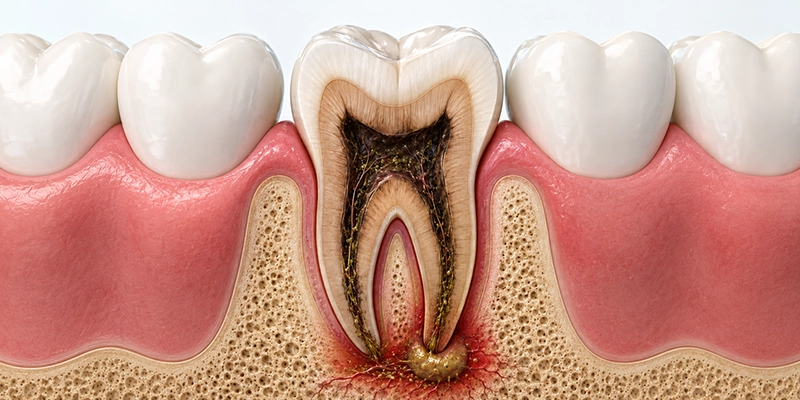
At this stage, the bacteria that originally infected the pulp remain inside the tooth. Without treatment, they continue travelling through the root canal system and into the surrounding tissues.
In many cases, the infection progresses silently for weeks, months, or even longer before more serious symptoms develop.
What happens if the infection is left untreated
Once an infection escapes your tooth, deep trouble begins within the surrounding structures that support it.
Infection can spread into the jawbone
The roots of the tooth sit within the jawbone. Bacteria exiting the infected root canals may trigger inflammation and destruction in this area.
Over time, this can lead to:
- Bone loss around the tooth
- Gum tenderness
- Pressure or swelling
- A loose tooth
- Persistent bad breath or unpleasant taste
Some patients experience only mild symptoms. Others develop sudden flare-ups that become extremely painful.
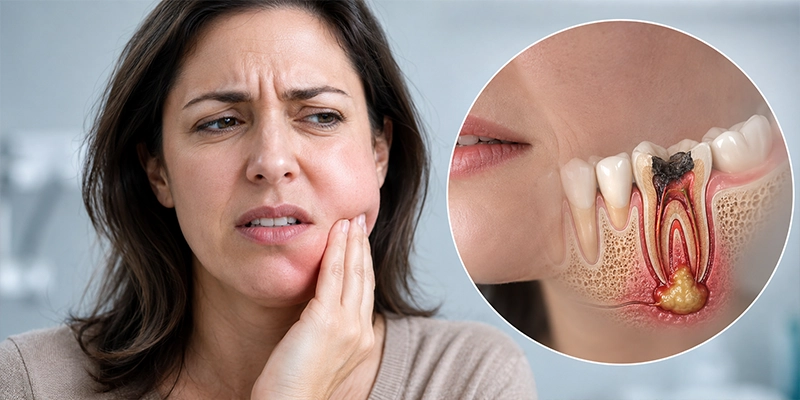
A dental abscess may develop
One of the most common complications is a dental abscess.
An abscess is a pocket of infection and pus that forms near the root of the tooth. It may cause:
- Swelling in the gums or face
- Pain when chewing
- A pimple-like bump on the gum
- Fever or feeling unwell
- Difficulty opening the mouth comfortably
In some cases, the abscess may drain temporarily, which can reduce pain and swelling for a short period. This often leads people to believe the issue has resolved, even though the infection remains active underneath.
Left untreated, severe dental infections can spread into surrounding tissues and become more serious health concerns.
Root canal therapy’s healing power
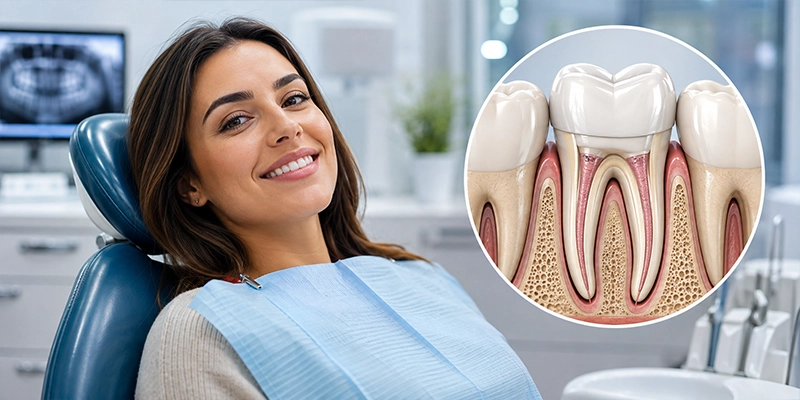
Root canal therapy’s greatest value lies in its ability to stop infection, preserve natural teeth, and restore long-term oral health. Far more than a pain-relief procedure, it addresses the underlying cause of the problem while helping patients avoid extraction.
Once the pulp has become irreversibly infected or the nerve tissue has died, the damaged tissue inside the tooth is removed. The root canals are then carefully cleaned, disinfected, and sealed to help prevent reinfection.
With proper restoration and care, a root canal-treated tooth can continue serving its purpose for decades.
Stress-free root canal therapy
Many people still associate root canal therapy with pain and anxiety, but modern dentistry has transformed the experience.
Today, the procedure is performed under effective local anaesthesia, and most patients describe it as feeling similar to having a routine filling. If the nerve inside the tooth has already died, there may be very little sensation within the tooth itself.
Today, the procedure is performed under effective local anaesthesia, and most patients describe it as feeling similar to having a routine filling. If the nerve inside the tooth has already died, there may be very little sensation within the tooth itself.
For many patients, the discomfort and uncertainty leading up to treatment are far worse than the treatment itself.
Following the procedure, a dental crown is often recommended to strengthen and protect the tooth, particularly when significant decay or structural damage is present.
What happens if you delay treatment
Delaying treatment may mean you lose your tooth. Caught early, pulp infection is often treatable; ignored, it can become tooth-threatening.
Once the infection causes extensive bone loss, fractures the tooth, or destroys too much structure, extraction may become the only option.
Replacing a missing tooth often involves:
- Dental implants
- Bridges
- Dentures
- Additional procedures such as bone grafting
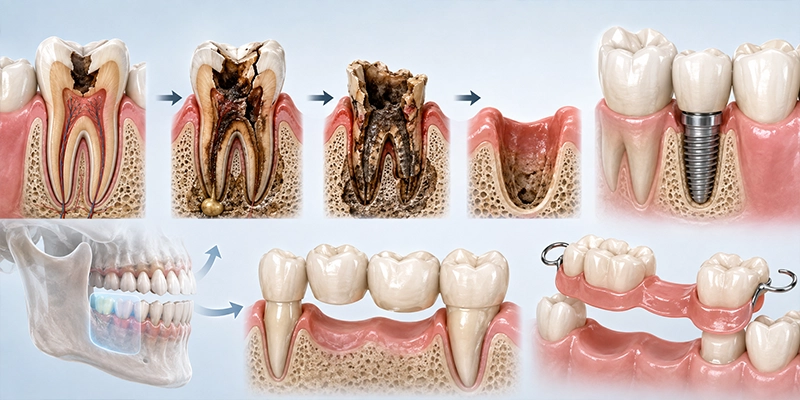
Not only are these treatments generally more complex, they are also more costly than preserving the natural tooth earlier through root canal therapy.
For this reason, saving a natural tooth is often preferable to replacing one. What’s more, the most conservative approach is often the one that delivers the best long-term result.
Signs you should still see a dentist even if the pain is gone
A tooth should still be assessed if you have experienced:
- A severe toothache that suddenly stopped
- Lingering sensitivity before the pain disappeared
- Swelling near the tooth or gums
- Darkening or discolouration of the tooth
- A history of deep decay or trauma
- A recurring bad taste in the mouth
- Pain when biting that comes and goes
Dental X-rays and clinical examination allow the dentist to assess whether infection is still present beneath the surface.
Prevention still matters
Many root canal cases begin with issues that develop gradually over time, including untreated decay, cracked teeth, heavy grinding, or delayed dental visits.
Consistent preventive care can significantly reduce the risk of deep infection. This includes:
- Regular dental examinations and cleans
- Early treatment of cavities
- Daily brushing and flossing
- Wearing a night guard if recommended
- Addressing cracked or damaged teeth promptly
Small problems are usually simpler, less invasive, and less costly to treat when identified early.
Do not assume your tooth has healed
A tooth that no longer hurts is not always a tooth that is healthy.
When a severe toothache suddenly disappears, it may signal that the nerve inside the tooth has died rather than healed. The infection can continue spreading quietly beneath the surface, often without obvious symptoms until more serious complications arise.
Keeping your dental appointment, even after the pain subsides, may help save the tooth and prevent more complex treatment later on.
If you have experienced a toothache that suddenly stopped, a professional assessment is the safest next step. Early intervention often makes treatment more predictable, comfortable, and conservative.
* Any clinical procedure carries risks. Individual treatments depend on your unique needs, and results may vary. We recommend seeking a second opinion from a qualified practitioner.